
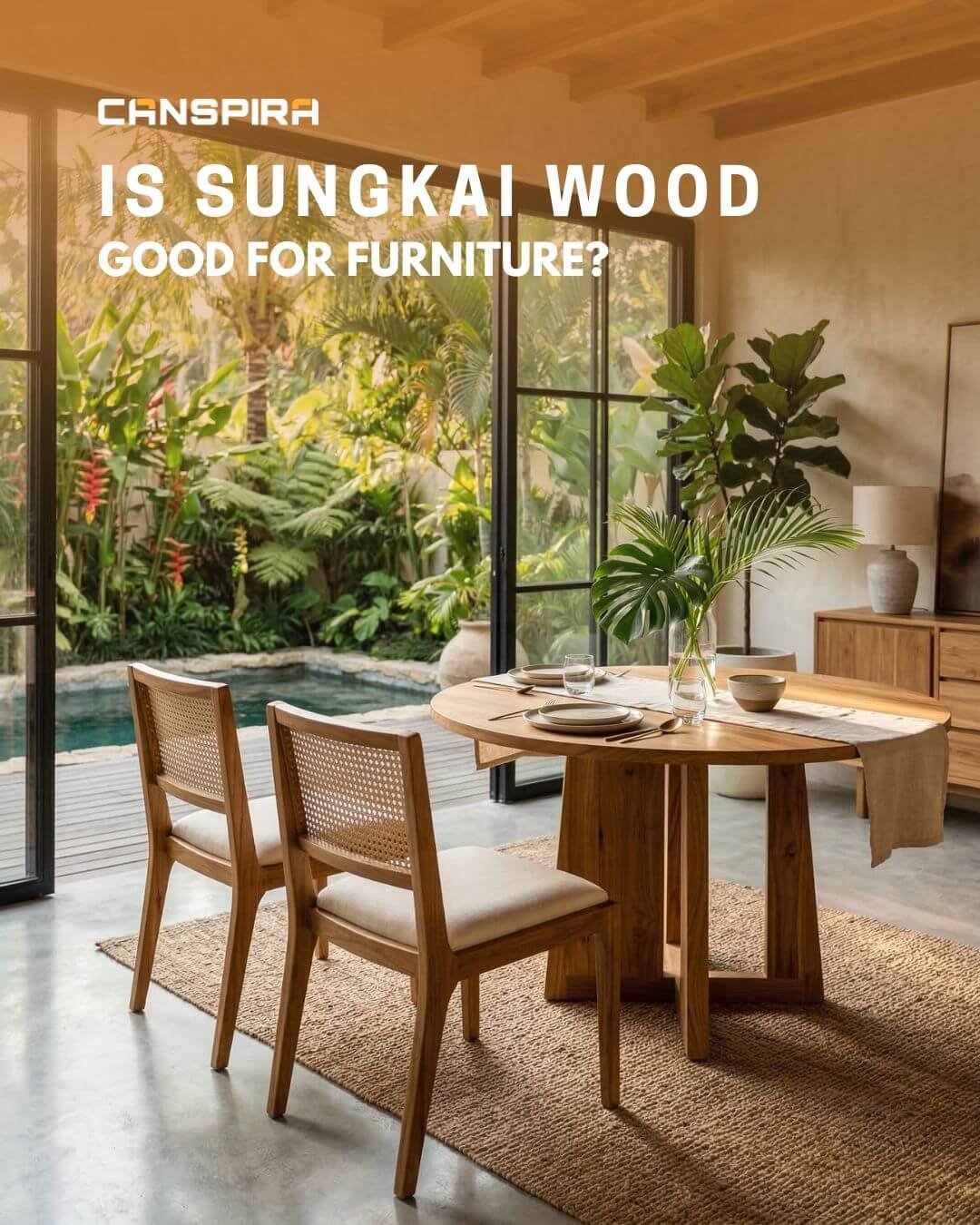
In the competitive world of international furniture trade, finding the perfect balance between aesthetic appeal, structural integrity, and cost-efficiency is a constant challenge for importers.
Many procurement directors in the US and Europe often ask, is sungkai wood good for furniture, especially when searching for a sustainable alternative to premium Teak.
As a seasoned Indonesian furniture manufacturer, we see a growing demand for this material because it bridges the gap between high-end luxury and market-friendly pricing.
This guide dives deep into the technical and commercial reality of sungkai wood to help you make an informed sourcing decision.
Understanding the Anatomy of Sungkai Wood
Sungkai (Peronema canescens) is a tropical hardwood native to Southeast Asia, with significant populations found in the secondary forests of Sumatra, Kalimantan, and West Java. Locally known as “Indonesian White Teak,” it has earned a reputation for its distinct visual character.
The wood typically features a light yellowish-cream color with a fine, straight grain that responds beautifully to modern finishing techniques.
From a technical standpoint, sungkai wood is classified as a medium hardwood. It boasts a specific gravity ranging from 0.58 to 0.64 $g/cm^{3}$ and a Janka hardness rating between 258 and 302 kgf.
While it is not as dense as old-growth teak, this moderate hardness provides a “sweet spot” for manufacturing. It is tough enough to withstand the daily rigors of a busy dining room but light enough to reduce shipping costs—a critical factor for B2B buyers managing ocean freight.
Mechanical Performance and Manufacturing Advantages
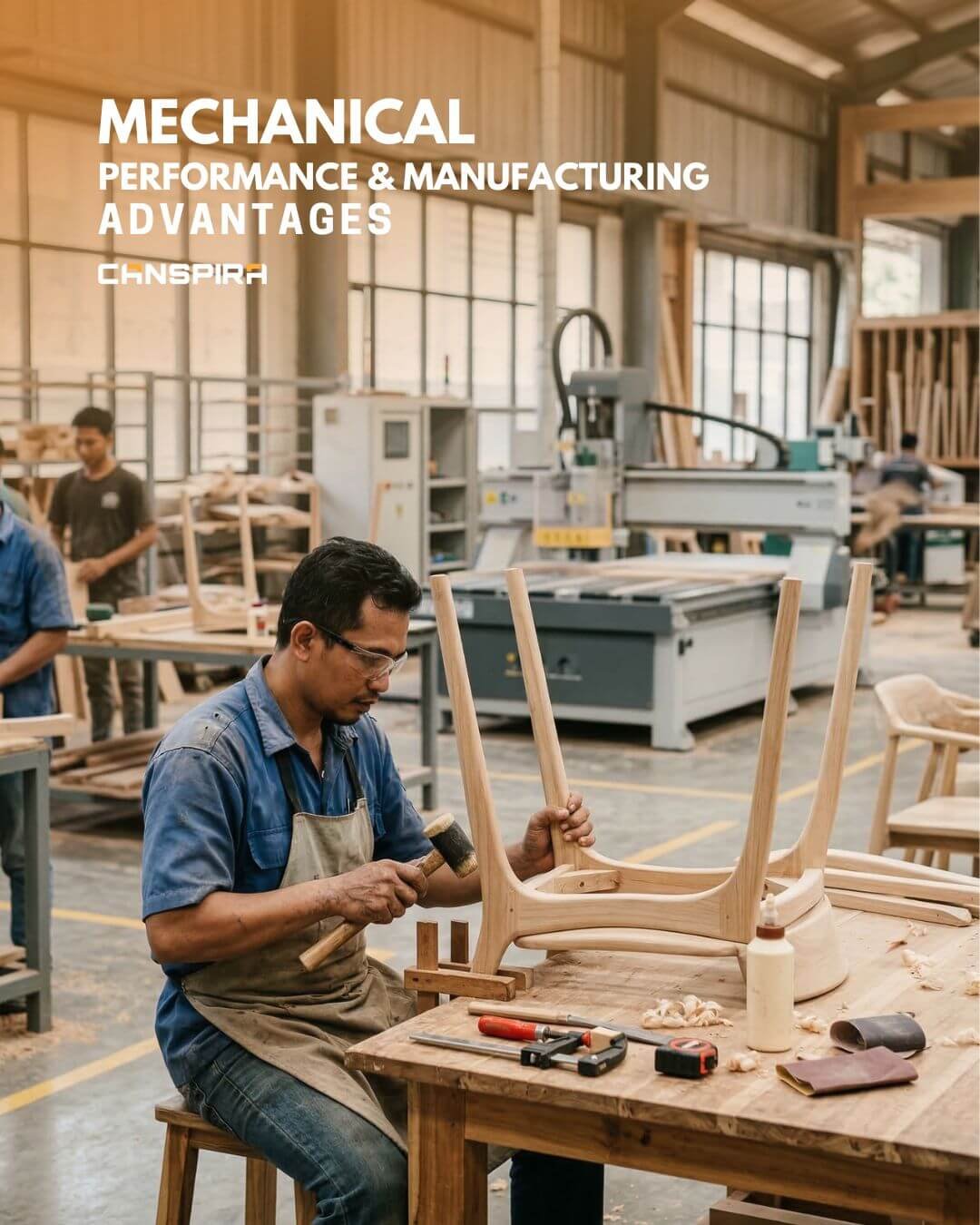
One reason workshops in Central Java prefer working with this material is its exceptional workability. Unlike extremely hard woods that dull saw blades and CNC bits rapidly, sungkai wood is remarkably friendly to precision machinery.
It cuts, drills, and sands to a smooth finish without significant splintering.
a. Dimensional Stability
When seasoned correctly to a moisture content (MC) of 10-12% through kiln-drying, sungkai exhibits reliable stability. This is vital for the US market, where humidity levels can fluctuate drastically between summer and winter.
b. Finish Responsiveness
Its open-pore structure makes it an ideal “canvas” for designers. It can be bleached for a clean Japandi look or stained to mimic White Oak or Black Walnut, giving importers the flexibility to adapt to shifting interior trends.
c. Structural Integrity
In our experience, using Mortise and Tenon joinery combined with modern CNC-cut components ensures that sungkai wood furniture remains sturdy over years of use, avoiding the “wobble” often associated with cheaper flat-pack alternatives.
Comparative Analysis: Sungkai vs. Acacia and Teak
To truly answer if is sungkai wood good for furniture, one must look at its competitors: Acacia and Teak. While Teak remains the “gold standard” for prestige, its high price point can limit market reach to the ultra-premium segment.
Conversely, Acacia is much cheaper but notoriously prone to warping, cracking, and “bleeding” moisture when moved to dry climates like Los Angeles or Dubai.
Sungkai sits comfortably in the middle. It offers the elegant, uniform look of a high-end hardwood at a Price-on-Board (FOB) that allows for healthy retail margins.
For B2B importers, this means lower capital tie-up per container and a significantly lower risk of “after-sales” claims due to structural cracks—a common pain point with Acacia.
Sustainability and International Compliance
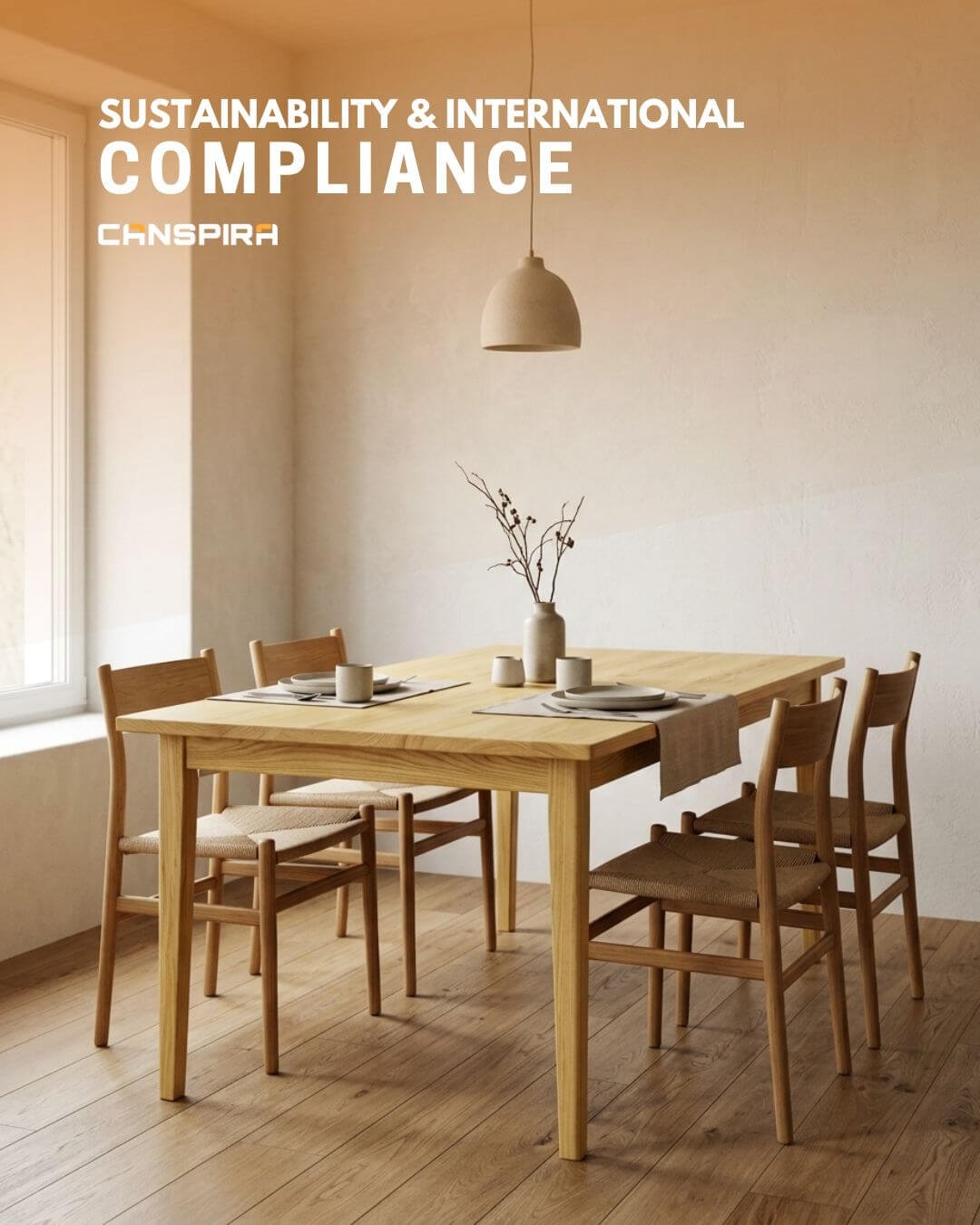
In today’s regulatory environment, the “green” credentials of a product are just as important as its design. European buyers, in particular, face strict scrutiny under the EU Timber Regulation (EUTR) and the upcoming EUDR. Choosing Indonesian sungkai wood provides a massive administrative advantage.
The Indonesian government has pioneered the SVLK (Sistem Verifikasi Legalitas Kayu), which is the world’s first fully operational FLEGT licensing scheme. Because sungkai is a pioneer species often grown in Industrial Forest Plantations (HTI), it is a renewable resource that avoids the destruction of primary rainforests.
When a container of FLEGT-certified furniture arrives at a European port, it enters via a “green lane,” exempting the importer from the costly and time-consuming due diligence usually required for tropical timber.
Limitations and Strategic Use Cases
Transparency is key to a long-term B2B partnership. While sungkai wood is excellent, it is not a “magic” material for every application. Its natural durability is rated at Class III, meaning it is perfectly suited for indoor environments but susceptible to rot if left in direct contact with wet soil or constant rain.
- Indoor Excellence: It is the definitive choice for dining sets, bed frames, and cabinetry.
- The Semi-Outdoor Niche: There is a growing “white space” in the market for covered patios and balconies. By applying high-grade marine-grade polyurethane or epoxy sealers, we can create hybrid “Semi-Outdoor” pieces that offer the look of luxury at a fraction of the cost of solid teak.
The Final Verdict for Importers
So, is it worth adding to your catalog? If your target demographic appreciates the “New Mid-Century” or “Modern Organic” aesthetic, the answer is a resounding yes. It offers a sophisticated, artisanal story that resonates with millennial and Gen-Z consumers who value both craftsmanship and sustainability.
By partnering with a factory that understands the nuances of ocean-ready packaging and international quality standards, you can secure a reliable supply of high-margin products that stand the test of time. The combination of Indonesian craftsmanship and the natural beauty of sungkai wood creates a product that is difficult to replicate in high-volume, automated factories elsewhere in Asia.
Contact Canspira
Ready to discuss your next collection or request a prototype? Our team specializes in helping international brands navigate the Indonesian manufacturing landscape with ease.
Canspira Furniture
Call or WhatsApp: +62 821-8326-0005
Email: sales@canspiraindonesia.com
Read also: Sungkai Wood Furniture Factory Direct for Wholesale Buyers and Sungkai Wood Furniture Supplier Offering Custom Designs