
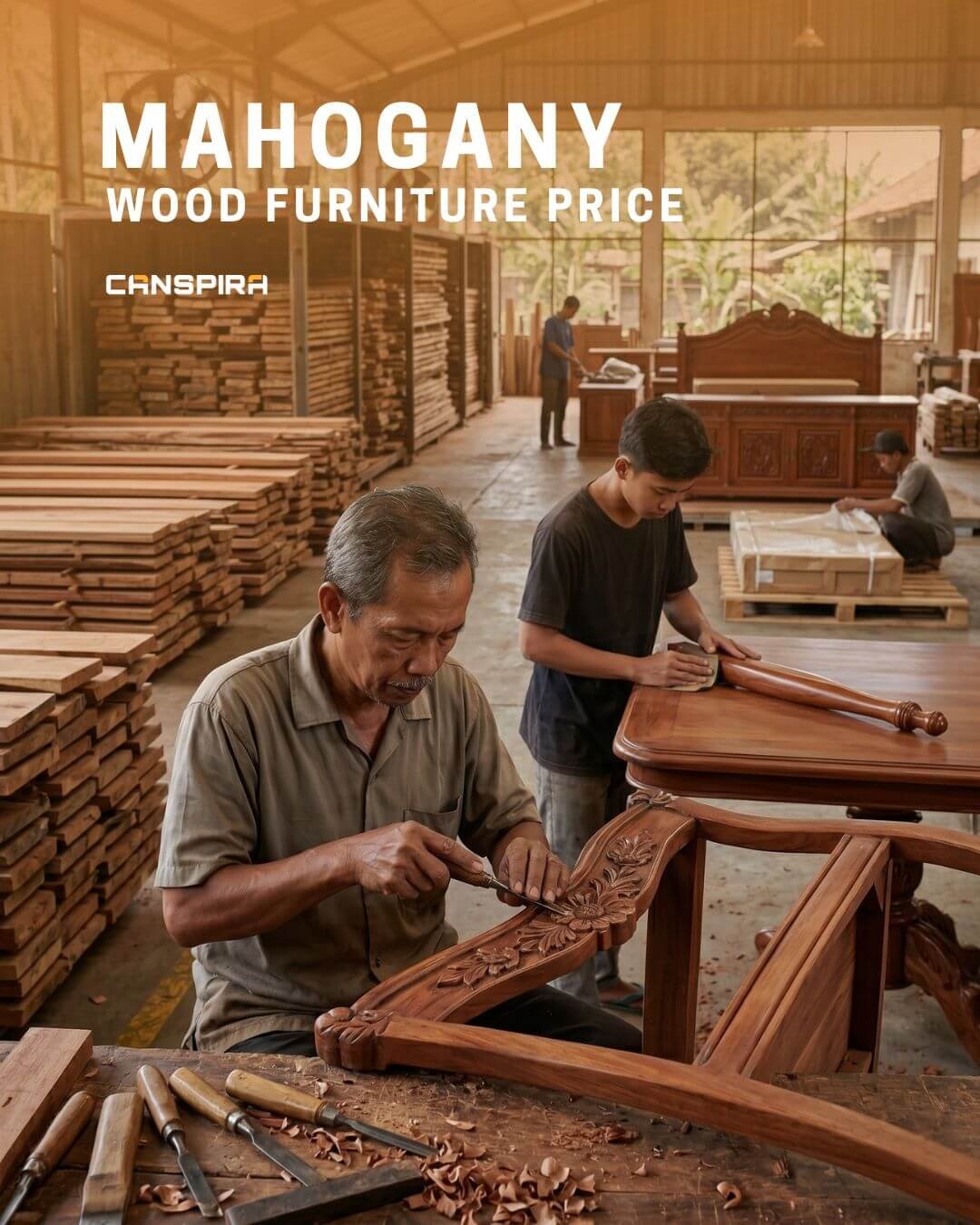
Mahogany wood furniture price points fluctuate significantly based on the botanical species of the timber and the complex logistics of international supply chains.
Procurement managers often find themselves navigating a maze of quotes that vary from budget-friendly utility pieces to high-end heritage investments. Understanding the transition from raw lumber costs to the final retail sticker price is essential for anyone looking to source quality cabinetry or tables.
Genuine mahogany remains the undisputed gold standard for luxury interiors, acoustic instruments, and prestige commercial projects across North America and Europe.
The Botanical Taxonomy Behind the Price Tag
The term “mahogany” is often used loosely in commercial marketing, but from a technical perspective, the specific species is the primary driver of value. A piece made from genuine Swietenia will always command a different market position than Shorea-based alternatives.
Genuine Mahogany (Swietenia macrophylla)
This is the pinnacle of furniture-grade hardwood, often referred to as Honduran or Cuban mahogany. It offers exceptional dimensional stability, which prevents the wood from warping or shrinking when moved between different climate zones.
Because of strict international logging regulations and its relative scarcity, the raw lumber cost typically sits between $10.00 and $15.00 per board foot. This material is what defines the “investment grade” of the mahogany wood furniture market.
African Mahogany (Khaya spp.)
Widely adopted as a functional and aesthetic substitute for genuine mahogany, the African variety serves as the backbone for large-scale commercial manufacturing. It provides a similar interlocking grain pattern but at a more accessible price point.
Wholesale transactions for raw boards generally operate in the $6.00 to $10.00 per board foot range. It allows retailers to offer a luxury look while maintaining sustainable profit margins.
Philippine Mahogany (Shorea spp.)
Technically part of the meranti family rather than true mahogany, this wood is the most economical option available. It dominates projects with tight budget constraints or is used for internal structural frames where the visual texture is hidden.
Prices usually range from $3.00 to $6.00 per board foot. Knowing how to identify mahogany wood furniture is vital here to ensure you are paying for the actual quality of the timber, not just a trade name.
B2B Export Dynamics: From Indonesian Factories to the World
For international buyers sourcing from manufacturing hubs in Central and West Java, the mahogany wood furniture price is usually quoted under Free On Board (FOB) terms.
This pricing structure includes the raw material, skilled labor, export-grade packaging, and domestic trucking to the port of loading.
Estimated FOB Price Ranges for Wholesale Orders
Based on current manufacturing benchmarks, here is how the costs breakdown for standard export units:
- Dining Chairs: Solid frames range from $17.70 to over $100.00, depending on carving complexity and upholstery options.
- Sideboards and Cabinets: Fine mahogany storage units with hand-carved details range from $115.00 to $1,300.00+.
- Dining Tables: Large-scale extension tables built for high-end residences generally command $600.00 to $1,300.00.
- Bed Frames: King or Queen size frames, especially classical canopy styles, fluctuate between $850.00 and $1,300.00.
Design Complexity and Man-Hours
The cost of mahogany wood furniture is heavily influenced by the “touch” of the artisan. A minimalist mid-century modern desk requires far fewer man-hours than a French Rococo replica with intricate floral relief carvings.
In centers like Jepara, these skills are inherited across generations, adding a layer of heritage value that justifies the higher manufacturing markup.
The Price Transmission Model: B2B to B2C Showrooms
It is common for importers to notice a massive disparity between factory prices and retail tags. A sideboard that costs $400 FOB at the port of Jakarta might land on a showroom floor in New York or London with a price tag of $3,000. This is not arbitrary; it is the result of a multi-layered markup model.
The Markup Multiplier Chain
1 . Manufacturer Markup: Factories usually apply a 3x to 4x multiplier on the raw material cost to cover kiln-drying, finishing, and operational overhead.
2 . Wholesaler/Importer Markup: Landing the goods involves ocean freight, insurance, and customs duties. Wholesalers typically resell at 1.5x to 2.0x of the total landed cost.
3. Retailer Markup: Metropolitan showrooms face high real estate costs and marketing budgets. They often add 200% to 400% on top of the wholesale price to sustain their operations.
Impact of International Regulations and Logistics
The final mahogany furniture price is also sensitive to global trade policies and maritime freight volatility. Shipping a 40ft High Cube container from Southeast Asia to the US West Coast can range from $2,800 to over $11,000 depending on the season.
Certification and Compliance Premiums
Cheap furniture often comes with hidden legal risks. Following regulations like the EUDR in Europe or the Lacey Act in the US means factories must invest in traceability. Certified mahogany (FSC or SVLK) usually carries a 10% to 20% price premium.
This additional cost acts as an insurance policy, protecting the buyer from government seizures or heavy fines due to illegal logging.
US Import Tariffs and HTS Coding
Tariffs play a massive role in the competitive landscape. With Section 301 duties on Chinese furniture potentially reaching 50%, sourcing from Indonesia has become a strategic necessity for many US brands.
However, small technicalities in how a product is classified—such as “bedroom furniture” versus “office furniture”—can shift the tax bracket and alter the final landed price.
Technical Quality and Long-Term Durability
When evaluating a mahogany furniture price, the most important technical factor is the Moisture Content (MC). Mahogany that hasn’t been properly kiln-dried is a liability.
For the US and European markets, wood must be dried to an 8-12% MC level to withstand indoor heating systems during winter.
The Value of Kiln-Drying
Factories that utilize computerized kiln-drying processes may charge a slight premium, but this investment eliminates the “moisture nightmare” of wood cracking or warping after arrival.
High-quality solid mahogany furniture is designed to last over 20 years, developing a rich patina that actually increases its value over time.
Investment Perspective for Professionals
Buying mahogany is ultimately a hedge against the “fast furniture” trend. While composite materials are cheaper upfront, they lack the structural integrity and resale value of solid hardwood.
Professionals recognize that the higher initial cost of genuine mahogany is amortized over decades of use, making it the most cost-effective choice for luxury residential and hospitality sectors.
Professional Investment Perspective
Buying mahogany is a hedge against the fast furniture trend. While composite materials are cheaper upfront, they lack the structural integrity and resale value of solid hardwood.
Professionals recognize that the higher initial cost of genuine mahogany is amortized over decades of use, making it a cost-effective choice for luxury residential and hospitality sectors.
Finding a balance between the botanical species, manufacturing precision, and regulatory compliance is what truly defines a successful procurement strategy in the mahogany market.
Read also: The True Value of Mahogany: An In-Depth Cost Analysis dan Top Mahogany Wood Furniture Suppliers in Indonesia