
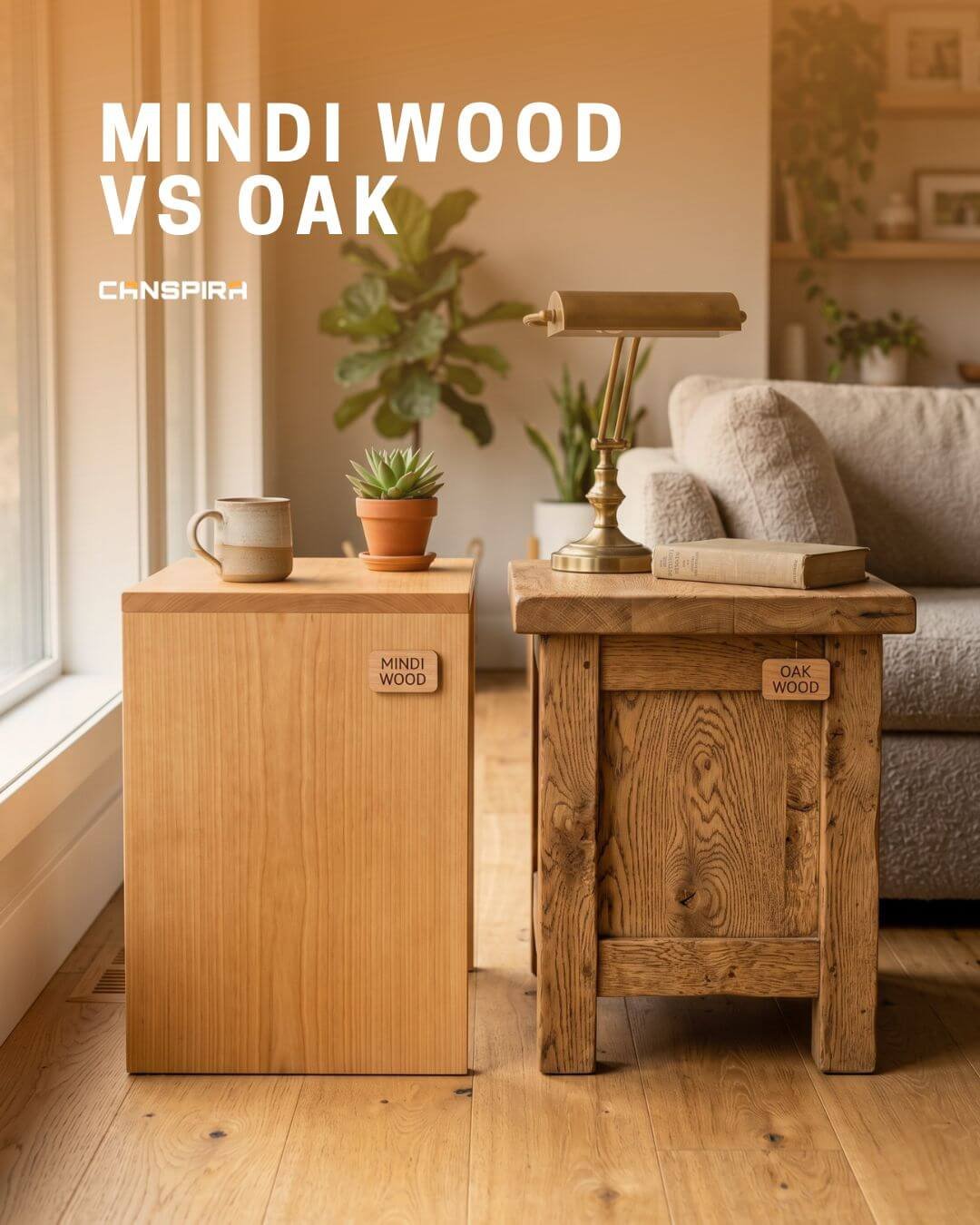
When shopping for new home additions, evaluating Mindi wood vs oak is a common dilemma for anyone torn between timeless beauty and budget limitations.
We often find ourselves staring at beautiful showroom pieces, wondering if the cheaper option will hold up over time or if the premium price tag of traditional hardwoods is truly justified.
Selecting the right lumber shapes the entire atmosphere of our living space. In this practical guide, we will unpack how these two materials compare in strength, appearance, and overall value, helping clear the confusion before making a final investment.
Demystifying the Warmth of Mindi Wood
Choosing the right timber requires looking past marketing buzzwords to understand the physical realities of the tree itself.
a. The Evolving Spectrum of Mindi Wood Colour
The natural palette of this timber is surprisingly rich and adaptable. When first harvested, the Mindi wood colour typically exhibits a warm range from light golden brown to a pale reddish-brown, while the outer sapwood features a lighter cream or yellowish hue.
A fascinating characteristic of this wood is how it ages. Over time, exposure to natural light coaxes the heartwood to darken gracefully, shifting into deeper honey tones that beautifully mirror premium traditional hardwoods.
Because it has an open-pore structure, it behaves like a sponge for wood stains. This allows manufacturers to finish it in a vast array of styles, easily mimicking the dark elegance of walnut or the classic look of traditional oak.
b. Why Working with Mindi is a Craftsman’s Dream
From a manufacturing standpoint, this wood provides incredible efficiency in the workshop. The straight to slightly interlocked grain patterns mean that saws and routers glide through the timber with minimal resistance.
When sourcing premium timber, choosing expertly processed solid Mindi wood ensures excellent dimensional stability, especially when it undergoes proper kiln-drying.
Our observations in manufacturing plants show that building a cabinet or table out of Mindi reduces cutting and sanding time by roughly 15% to 20% compared to dense tropical alternatives.
This production speed lowers factory labor costs, allowing the final savings to be passed directly to the homeowner.
Face-to-Face Breakdown: Mindi Wood vs Oak
Pitting these two options against each other reveals distinct differences in grain character, weight, and daily resilience.
1. Density and the Janka Hardness Paradox
On paper, the technical data presents a fascinating surprise. Mindi registers a Janka hardness rating of 1.8 to 2.2 in metric units, which mathematically puts it ahead of traditional red oak, which sits around 1.2 to 1.3 metric units.
However, numbers do not tell the whole story. Oak features a significantly tighter, more compact fiber structure that makes its surface incredibly tough. This dense fiber arrangement gives oak excellent protection against daily wear and tear.
Mindi, despite its high Janka rating, has a slightly more flexible surface texture. This means that while a Mindi table can handle heavy weight without breaking, its surface is more prone to minor scratches or shallow dents if heavy objects are dropped carelessly.
2. Visual Texture and Aesthetic Character
Oak is legendary for its bold, ring-porous grain patterns that give rustic and traditional furniture its distinctive, heavy character. The grain lines are prominent, deeply textured, and instantly recognizable.
Mindi offers a cleaner, more understated aesthetic. Its grain is straight, uniform, and highly consistent, giving it a sleek modern look. Because its visual texture resembles a refined, lighter version of ash or mahogany, it fits perfectly into minimalist, Scandinavian, or modern interior designs.
For homeowners seeking an airy, contemporary feel, Mindi is an exceptional choice; for those who love heavy, deeply textured traditional furniture, oak remains a classic favorite.
3. Weight, Portability, and Logistics
Think about moving day. Lifting a solid oak dining table requires serious muscle due to its immense weight and dense structure. Mindi is notably lighter, making it far easier to rearrange our living room layout or assemble knockdown pieces upon delivery.
This lower density offers huge benefits for international transport as well. Lower weight reduces shipping costs, making Mindi wood furniture from Indonesia a highly attractive option for international buyers looking to maximize container space without breaking the bank on freight fees.
Comparing Mindi Against Other Wood Legends
To truly understand where Mindi fits in the broader market, we should examine how it positions itself against other classic furniture materials.
a. Mindi Wood vs Teak
When we look at Mindi wood vs teak, the division between indoor and outdoor utility becomes clear. Teak is packed with natural protective oils that make it virtually immune to rot, moisture, and pests, crowning it the undisputed king for outdoor patios and luxury yachts.
Mindi lacks these high concentrations of natural oils. Therefore, while it serves as an excellent, budget-friendly alternative for indoor dining sets, it should not be left exposed to harsh outdoor elements without extensive protective treatments.
b. Mindi Wood vs Walnut
The matchup of Mindi wood vs walnut represents a choice between casual versatility and high-end luxury. True black walnut is a premium timber celebrated for its deep chocolate brown hues and elegant grain patterns, commanding a massive price premium.
Mindi is inherently lighter and more casual. However, because Mindi features an open-pore structure, it takes dark stains with incredible uniformity. We can easily stain Mindi to achieve a convincing walnut aesthetic at a fraction of the cost.
c. Mindi Wood vs Acacia
Evaluating Mindi wood vs acacia reveals an interesting contrast in durability and grain style. Acacia is a heavy, incredibly hard wood known for its wild, dramatic grain swirls and rich contrasting colors, making it a favorite for rustic live-edge slab tables.
Mindi provides a much more uniform, calm visual profile. While acacia wins on pure scratch resistance, Mindi is far easier to cut, shape, and move around the house.
Comprehensive Wood Comparison Matrix
Reviewing a structured breakdown helps clarify the exact trade-offs between these five popular furniture options.
| Wood Species | Hardness Class | Weight Class | Visual Grain Pattern | Primary Use Case | Cost Category |
|---|---|---|---|---|---|
| Mindi Wood | Medium-Hard | Light-Medium | Straight, uniform, fine lines | Indoor sets, bedroom cabinets | Economical / Affordable |
| Oak Wood | Hard | Heavy | Bold, prominent, ring-porous | Flooring, heavy traditional framing | High / Luxury |
| Teak Wood | Medium | Medium-Heavy | Elegant, golden-brown waves | Outdoor patios, luxury yachts | Premium / Expensive |
| Acacia Wood | Hard | Heavy | Wild, dramatic, erratic swirls | Live-edge tables, heavy desks | Medium |
| Walnut Wood | Medium-Hard | Medium-Heavy | Rich, deep, elegant curves | Premium executive desks, luxury accents | Extremely High |
Practical Strategies to Maximize Mindi Wood Longevity
Keeping your furniture in pristine condition over the years comes down to managing environmental factors correctly.
The biggest challenge with Mindi wood involves its sensitivity to drastic changes in humidity. If the raw timber is dried poorly before manufacturing, dry winter air in cold climates can cause the wood to contract rapidly, leading to warping or split joints.
To prevent this, our manufacturing partners employ precise kiln-drying processes to lock the internal moisture content between 8% and 12%. This scientific stability ensures that the dining table stays perfectly flat regardless of the season.
Furthermore, using simple safeguards like table runners or felt pads under heavy ceramics protects the slightly softer surface from accidental abrasions.
Finding the Right Balance for Your Home
Selecting the ideal material ultimately depends on finding harmony between your aesthetic preferences and practical lifestyle demands.
If the primary goal is a durable heirloom piece that can withstand heavy outdoor elements or constant rough handling, investing in premium options like oak or teak is completely justified. However, for beautiful, lightweight, and highly adaptable indoor furniture, Mindi provides an unmatched price-to-appearance ratio. It lets us achieve the high-end look of expensive timbers while keeping our budget intact.
When sourced responsibly, Indonesian hardwood furniture made from Mindi delivers a wonderful combination of sustainable harvesting, expert craftsmanship, and timeless style that fits effortlessly into any modern household.
Read also: Premium Teak Wood Patio Set Furniture for Global Importers and Premium Teak Patio Dining Table for Global Wholesalers