
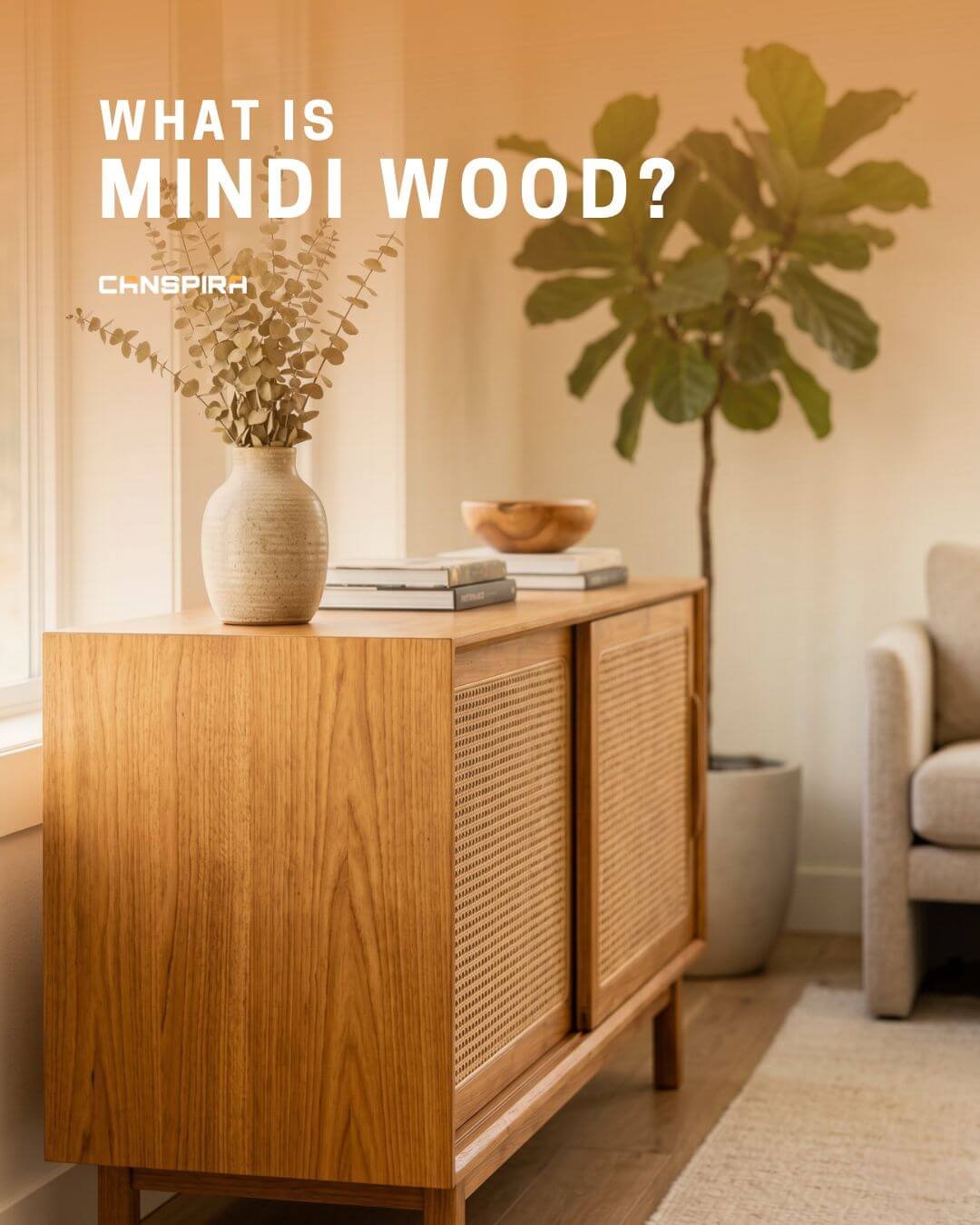
When sourcing sustainable materials for high-end interior projects, global buyers frequently ask what Mindi wood is and why it dominates modern showrooms.
Navigating the world of commercial lumber can feel overwhelming when balancing aesthetic appeal with strict budgetary limits. We often see buyers caught between the high price tag of traditional oak and the fragile nature of cheap engineered options.
Mindi emerges as a fascinating middle ground that offers luxury aesthetics without the premium cost. Let us break down everything you need to know about this versatile material.
Understanding the Basics of This Fast-Growing Hardwood
To understand why this material has gained such a massive foothold in the global supply chain, we must look at its biological identity.
a. Defining Mindi Wood and Its Botanical Origins
Mindi wood is derived from the tree species Melia azedarach. In the global trade network, this species is frequently marketed under alternative commercial names, including White Cedar, Chinaberry, or Mindy Wood.
It is classified as a medium-density, fast-growing hardwood. Historically, its presence in places like the Indonesian archipelago dates back to the 17th century when Dutch colonial trade routes expanded its cultivation.
Today, it represents a highly reliable, plantation-grown resource that helps reduce dependency on slower-growing old-growth forests.
b. The Difference Between Mindi Wood and Mindi Timber
The terminology can sometimes confuse newcomers to the industry, so we should clarify that what is Mindi timber refers directly to the raw lumber, boards, or processed logs used by builders and craftsmen.
Once the logs are harvested from sustainable plantations, they enter the sawmill to become timber. This material is then seasoned, cut, and prepared for industrial production.
On the flip side, the term “Mindi wood” is more commonly utilized by retail consumers, designers, and marketers when referring to the finished material used in home decor.
Where Does This Beautiful Timber Come From?
Tracking the geographic supply chain helps wholesale buyers guarantee the legality and sustainability of their raw materials.
When looking at where Mindi wood is from, the biological footprint spans across native regions in Southeast Asia, parts of India, and northern Australia. However, the commercial heart of the industry beats strongest in Indonesia.
Over the past few decades, the country has successfully established tightly managed community forests and sustainable plantations to supply global demand. We have seen a significant shift where international brands prefer sourcing finished goods directly from Southeast Asian manufacturing hubs.
Buyers looking for premium craftsmanship frequently secure high-quality Mindi wood furniture from Indonesia because of the region’s historical woodworking expertise and well-developed shipping infrastructure via major ports like Semarang and Surabaya.
Evaluating the Core Strength and Structural Integrity
Before investing in any new line of inventory, savvy importers look beyond aesthetics to examine physical performance metrics.
Determining is Mindi wood’s good quality requires an objective look at its mechanical properties and how it behaves under daily wear.
1. The Janka Hardness Surprise
Many buyers are surprised to learn that Mindi scores remarkably high on the Janka hardness scale. It typically registers between 1.8 and 2.2 metric units, which translates to roughly 1,055 pounds-force (lbf) in imperial measurements.
To put this into perspective, this score actually surpasses plantation-grown teak and closely rivals classic northern hardwoods. This density provides a solid structural foundation for load-bearing items.
2. Weight and Density Dynamics
Despite its high Janka rating, the wood remains surprisingly lightweight. This unique combination offers a great strength-to-weight ratio, which simplifies transit logistics and reduces overseas shipping costs.
However, we must note that the surface fibers are slightly softer and more open compared to tightly packed grains like oak.
This means that while the core structure is incredibly strong, the surface can be susceptible to dents or deep scratches if subjected to rough handling.
3. Moisture Resistance and Climate Challenges
Because it is a fast-growing species, it naturally lacks the dense, oily protective compounds found in old-growth exotic timbers.
We often warn buyers about the dangers of improper seasoning; if the timber is processed with high moisture content, shipping it to a dry, cold northern hemisphere winter can trigger sudden warping or cracking.
To combat this, reputable manufacturers use advanced kiln-drying techniques to stabilize the wood at an ideal moisture level of 8% to 12% before any assembly begins.
Why Interior Designers and Manufacturers Love It
Production efficiency and design flexibility are the primary drivers behind the rapid adoption of this material in international markets.
When clients ask us whether Mindi wood is good for furniture, our answer highlights the practical benefits it brings to both the workshop and the living room.
1. Stunning Aesthetic Appeal
The visual character of the wood is its greatest selling point. It features a straight, highly expressive grain pattern with subtle texture variations that instantly catch the eye.
When freshly cut, it displays a light yellowish-white tone, but it gracefully darkens over time into a warm, golden honey hue. Because it looks so similar to premium temperate hardwoods, the global market frequently calls it “Indonesian Ash.”
2. Incredible Workability and Machining Efficiency
From a manufacturing standpoint, the medium density is a dream to work with. Craftsmen can cut, mold, and carve the wood with minimal wear on machine blades.
Studies indicate that choosing this material can reduce factory production time by 15% to 20% compared to working with dense teak, directly lowering operational costs.
3. Outstanding Finishing Versatility
The open-pore structure acts like a sponge for wood stains and treatments. Whether a designer wants a natural transparent glaze, a rich dark walnut tone, a bold black wash, or a smooth painted pastel finish, the wood accepts the application perfectly.
It is also an ideal candidate for distressed finishes, which hide minor everyday scratches beautifully.
The Affordable Luxury Alternative
In a competitive retail landscape, price positioning is vital. Consumers want the prestige of solid wood without draining their bank accounts.
Evaluating Mindi wood vs oak reveals that Mindi provides an almost identical luxury aesthetic at a fraction of the wholesale cost, making it the ultimate definition of affordable luxury.
Comparing Mindi with Other Global Hardwoods
We can better appreciate the market position of this timber by directly contrasting its specifications against other common manufacturing woods.
| Wood Species | Janka Hardness (Metric / lbf) | Dimensional Stability | Grain & Color Profile | Price Tier | Primary Application |
|---|---|---|---|---|---|
| Mindi Wood | 1.8–2.2 / 1,055 lbf | Highly Stable (when kiln-dried) | Straight, expressive, honey-gold | Economic / Accessible | Indoor Furniture, Cabinets |
| Teak Wood | 1.0–1.1 / 1,000–1,150 lbf | Very High (Naturally Oily) | Elegant wavy grain, dark golden brown | Premium / Luxury | Outdoor Luxury, Marine/Yacht |
| Red Oak | 1.2–1.3 / 1,060 lbf | Medium to High | Prominent coarse grain, reddish-brown | High / Luxury | Flooring, Premium Paneling |
| Acacia | High / High | Medium | Random patterns, dense grain, dark rustic | Medium | Dining Tables, Garden Benches |
| Rubberwood | Medium / Medium | Medium | Uniform texture, pale cream-yellow | Very Low | Mass-Produced Knockdown Items |
Exploring Common Applications in Contemporary Homes
The unique physical traits of this timber make it perfect for creating stunning, reliable indoor settings.
Investing in premium what is Mindi wood furniture allows homeowners to elevate their living spaces across several core categories.
a. Elegant Bedroom Collections
The lightweight nature of the wood makes it a preferred choice for bedroom manufacturing. Products like minimal bed frames, bedside tables, wardrobes, and dressers are easier to pack, ship, and assemble at home. The warm honey tones bring a cozy, serene atmosphere to sleeping quarters.
b. Functional Living and Dining Spaces
We see massive global demand for solid dining tables, chairs with curved backrests, sideboards, TV consoles, and media storage units.
It blends seamlessly into popular interior design movements such as Scandinavian, Japandi, and Rustic Modern. Manufacturers frequently pair it with natural woven rattan or sleek brass hardware to create breathtaking contemporary pieces.
Long-Term Care Tips to Protect Your Investment
Proper maintenance ensures that high-quality timber items retain their structural integrity and visual charm for decades.
While the material is durable, implementing basic care methods prevents premature wear and keeps the wood looking pristine:
- Routine Dusting: Use a dry microfiber cloth or a soft-bristled brush to clear away dust, preventing micro-scratches on the finished surface.
- Managing Spills: Clean light stains using a cloth slightly dampened with water, then immediately dry the area with a clean towel to prevent water spotting.
- Environmental Placement: Position the items away from harsh direct sunlight, extreme humidity, or directly in front of heating vents to avoid rapid fiber shrinkage.
- Surface Protection: Always utilize coasters, placemats, or table runners to shield the relatively soft surface from sharp objects and heat rings.
- Periodic Polishing: Apply a thin layer of high-quality furniture polish or natural wood oil every 3 to 6 months to maintain the grain’s signature radiance.
Practical Sourcing Choices for Global Importers
Finding a balance between aesthetic elegance, manufacturing speed, and cost efficiency remains a top priority for successful furniture businesses.
For global buyers looking to expand their catalog, selecting the right material is only half the battle. The real success comes from partnering with manufacturers who understand the deep technical requirements of international trade.
We recommend verifying that your supply chain utilizes advanced double-impregnation treatments and maintains strict SVLK and FSC certifications to avoid customs blockages.
If you are aiming to capture the mid-to-high segment of the market with durable, beautiful designs, choosing premium Indonesian hardwood furniture ensures you deliver exceptional value to your end consumers while securing a sustainable future for the industry.
Read also: Premium Teak Wood Patio Set Furniture for Global Importers and Wholesale Acacia Wood Patio Furniture for B2B Importers